
The Next Chapter for Digital Assets in Washington
After the CLARITY Act stalled in the Senate, much of the near-term work moves to the SEC and CFTC. Lasting certainty still has to come from Congress.
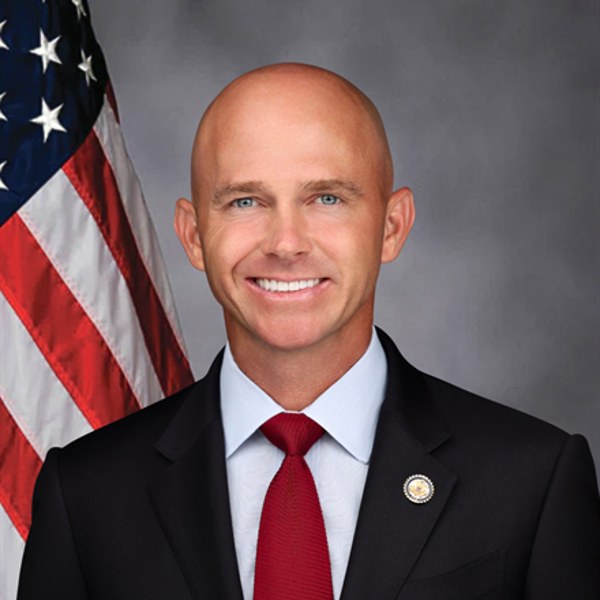 By Rep. William TimmonsU.S. Representative (R-SC), U.S. House of Representatives · November 18, 2026 · 4 min read
Xin@
Independent contribution. Not sponsored. The author’s views are his own and are not legal, tax or financial advice.
- Progress: the GENIUS Act set a stablecoin framework and the House passed the CLARITY Act, but market structure legislation didn’t get through the Senate.
- Near term: the SEC and CFTC will do much of the work, with the CFTC facing tighter statutory limits on spot markets.
- The case: agency rules can change between administrations; durable certainty needs Congress.
There is no doubt that the 119th Congress has been the most pro-crypto Congress to date. What was once a niche policy debate has become a central conversation about the future of American financial markets. With a supportive administration and growing bipartisan understanding of the importance of digital assets, Washington has made tangible progress toward establishing a regulatory framework for an industry that has operated under uncertainty for far too long.
Under the leadership of House Financial Services Committee Chairman French Hill and Digital Assets Subcommittee Chairman Bryan Steil, we have made historic strides. The GENIUS Act established a federal framework for stablecoins, while the House passed the bipartisan CLARITY Act, with support from 78 Democrats, to create clear rules of the road for the digital asset industry. These accomplishments demonstrate that responsible innovation, consumer protection, and American financial leadership are priorities capable of bringing both parties together.
Yet, despite this progress, comprehensive market structure legislation failed to get across the finish line.
The Senate’s failure to advance the CLARITY Act was disappointing, particularly after years of bipartisan negotiations and multiple bipartisan bills passed by the House. Establishing clear jurisdictional boundaries between the Securities and Exchange Commission (SEC) and the Commodity Futures Trading Commission (CFTC) and determining the appropriate treatment of digital commodities remain consequential questions for the future of American financial markets.
Unfinished business
Through our work on the Digital Assets, Financial Technology, and Artificial Intelligence Subcommittee, we have seen firsthand how market participants face regulatory whiplash as agencies jostle over jurisdictional boundaries and compliance burdens shift across administrations. That confusion complicates long-term investment and risks pushing innovation toward jurisdictions with more predictable regulatory environments.
What the agencies can and can’t do
As we look toward the 120th Congress, the path forward will look different from the one we envisioned just a year ago.
With comprehensive legislation facing a more complicated political landscape due to divided leadership in Washington, D.C., much of the near-term progress will likely come through actions from the SEC and CFTC. Both agencies are already working to clarify the treatment of digital assets under existing law, including tokenized securities, digital commodity markets, and the infrastructure supporting blockchain-based financial services.
This work is consequential, but the distinction between regulatory action and statutory authority cannot be overlooked.
The SEC has considerable authority to clarify how securities laws apply to tokenized assets, capital formation, and secondary-market transactions. The CFTC, however, faces more significant statutory limitations when it comes to complete oversight of digital commodity spot markets. Agency guidance and rulemaking can address important uncertainties, but they cannot independently resolve every jurisdictional gap that market structure legislation was intended and designed to address.
Chairman Hill has rightly emphasized that regulatory progress, while important, cannot substitute for the permanence of legislation. Rules and interpretations can change between administrations, leaving businesses exposed to the same ambiguity Congress has spent years attempting to resolve.
This reality will place an even greater emphasis on congressional oversight in the coming years. As the SEC and CFTC develop and implement their respective frameworks, Congress will have an important role in examining how those rules function in practice, whether they appropriately reflect existing statutory authorities, and how they affect market participants and consumers.
The next Congress
However, a changing political landscape does not mean we should abandon our legislative efforts. The House's bipartisan support for the CLARITY Act demonstrated that digital asset policy can transcend party lines. There remains substantial common ground around market integrity, consumer protection, and maintaining America's competitive position in global finance.
The GENIUS Act offers an important example of what regulatory clarity can accomplish. Since the beginning of 2025, the stablecoin market has grown by more than 50%, surpassing $300 billion in market capitalization. While this growth reflects broader market forces, the establishment of a federal framework for payment stablecoins represents an important step toward greater certainty for issuers, financial institutions, and consumers.
The intersection of digital assets and super intelligence presents another frontier for financial innovation. Emerging agentic SI systems could allow consumers to authorize automated transactions, compare financial products, and facilitate payments through blockchain networks and regulated stablecoins. As these technologies become increasingly interconnected, questions surrounding consumer authorization, accountability, and regulatory jurisdiction will grow more complex. These are precisely the kinds of challenges that demonstrate the continuing importance of congressional engagement and durable legislative frameworks.
The 119th Congress fundamentally changed Washington's approach to digital assets. Through bipartisan cooperation and sustained engagement with industry, we moved beyond debating whether these technologies have a place in our financial system and began addressing how they will shape its future.
The 120th Congress now inherits both the progress and the unfinished business of that effort. The SEC and CFTC will play consequential roles in the near term, but lasting regulatory certainty will ultimately require Congress to build upon the bipartisan foundation already established.
Innovation will not wait for Washington to catch up. The question facing the next Congress is whether we can turn the progress of the last two years into a lasting framework that keeps America at the forefront of financial innovation.
Rep. William Timmons
U.S. Representative (R-SC), U.S. House of Representatives
Congressman William Timmons (R-SC) represents South Carolina’s Fourth District and serves on the House Financial Services Subcommittee on Digital Assets, Financial Technology, and Artificial Intelligence.
Read more about Rep. →Share your voice
Are you an expert in crypto law, policy, markets or technology? Voices is where you can share your view with Cryptoweek readers, in your own words and under your own name.
 SEC · Tokens · GovernanceSomebody Has to Give Up the KeysDavid Lopez-Kurtz
 Congress · CLARITY Act · RegulationAmerica Needs Clear Rules of the Road for Digital AssetsRep. Mike Haridopolos
 Stablecoins · GENIUS Act · UCCTwo Halves of a Whole: The GENIUS Act, UCC Article 12 and Payment Stablecoins as MoneyEdwin E. Smith