
What is a rollup in crypto?
A rollup is a layer 2 network that runs transactions off the main chain and posts the data back to it, cutting fees while leaning on Ethereum for security.
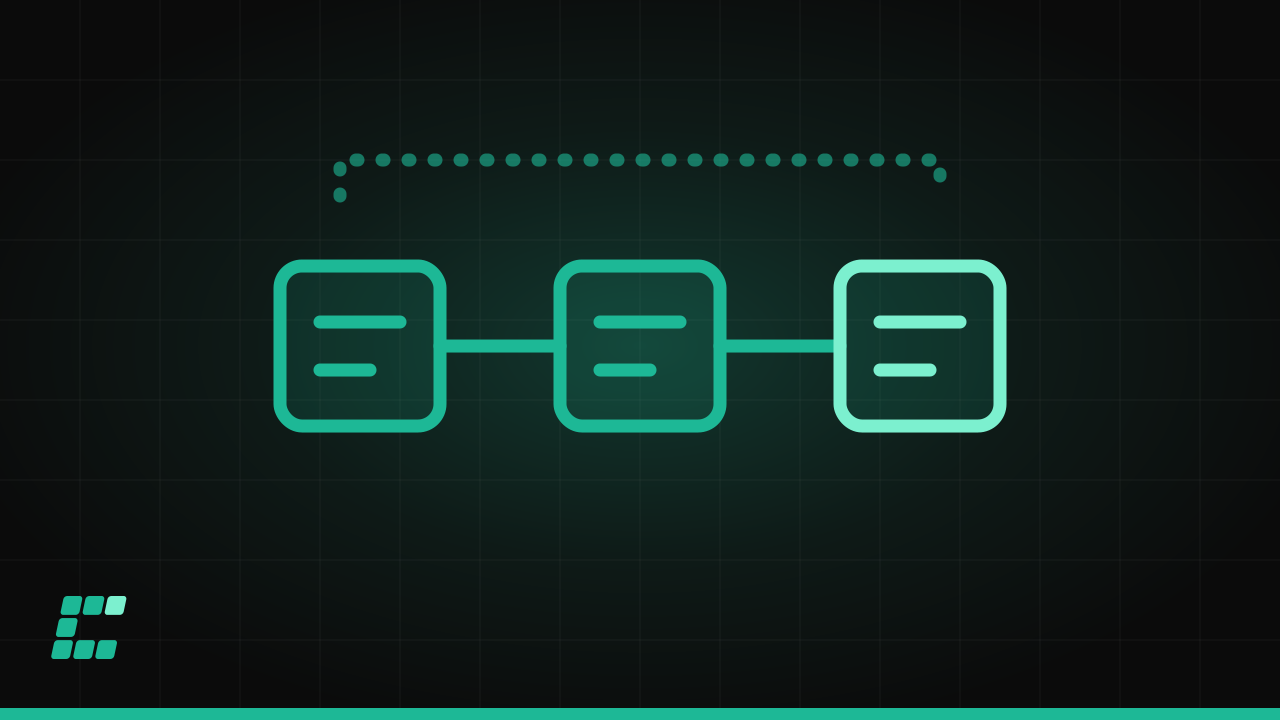
A rollup in crypto is a separate blockchain network that processes transactions away from the main chain, then rolls them up into compact batches and posts that data back to the main chain. Ethereum is the best known example of a base layer for rollups. The goal is cheaper and faster transactions without giving up the security of the chain underneath.
How do rollups work?
Users send transactions to the rollup instead of to Ethereum directly. A component called a sequencer orders those transactions, executes them, and groups many of them into a batch. The batch is compressed and published to Ethereum, either as calldata or in data "blobs," and a smart contract on Ethereum records the new state of the rollup.
Because many transactions share the cost of one Ethereum posting, each user pays a much smaller fee. Because the raw data sits on Ethereum, anyone can download it and reconstruct the rollup's balances. That is what lets a rollup inherit Ethereum's security rather than relying only on its own operators. For more on what drives the cost of posting data, see what are gas fees.
What is the difference between an optimistic rollup and a zk rollup?
The two main designs differ in how Ethereum knows a batch is correct.
An optimistic rollup assumes every batch is valid. After a batch is posted, there is a challenge period of roughly seven days in which anyone can submit a fraud proof. If the challenge succeeds, the bad batch is reversed and the operator who posted it can be penalized. Arbitrum and Optimism use this model.
A zk-rollup (zero-knowledge rollup) posts a validity proof with each batch. The Ethereum contract checks the proof and accepts the new state only if it verifies. ethereum.org lists networks such as ZKsync Era, Starknet, Scroll and Linea in this group. Generating these proofs takes heavy computation, and making them work with general smart contracts has been harder than for simple transfers.
Is a rollup the same as a layer 2?
Not exactly. A layer 2 is any network built on top of a base chain to extend it. ethereum.org treats a network as a direct extension of Ethereum when it stores its data on Ethereum mainnet, and those networks are the ones called rollups. Other layer 2 style networks keep their data somewhere else, which adds a different trust assumption. So every rollup is a layer 2, but not every layer 2 is a rollup.
How long does it take to withdraw from a rollup?
Deposits from Ethereum to a rollup usually arrive within minutes. Going the other way depends on the design. On an optimistic rollup, a standard withdrawal must wait for the challenge period to end, about one week. Third party liquidity providers can pay you on Ethereum sooner in exchange for a fee, often through a crypto bridge. On a zk-rollup there is no built-in delay, since funds can be released once the validity proof for the batch has been verified on Ethereum.
This guide explains how things work. It is not financial, legal or tax advice. Last updated .