
What does decentralized mean in crypto?
Decentralized means no single person, company or government controls the network. Records, rules and decisions are spread among many participants.
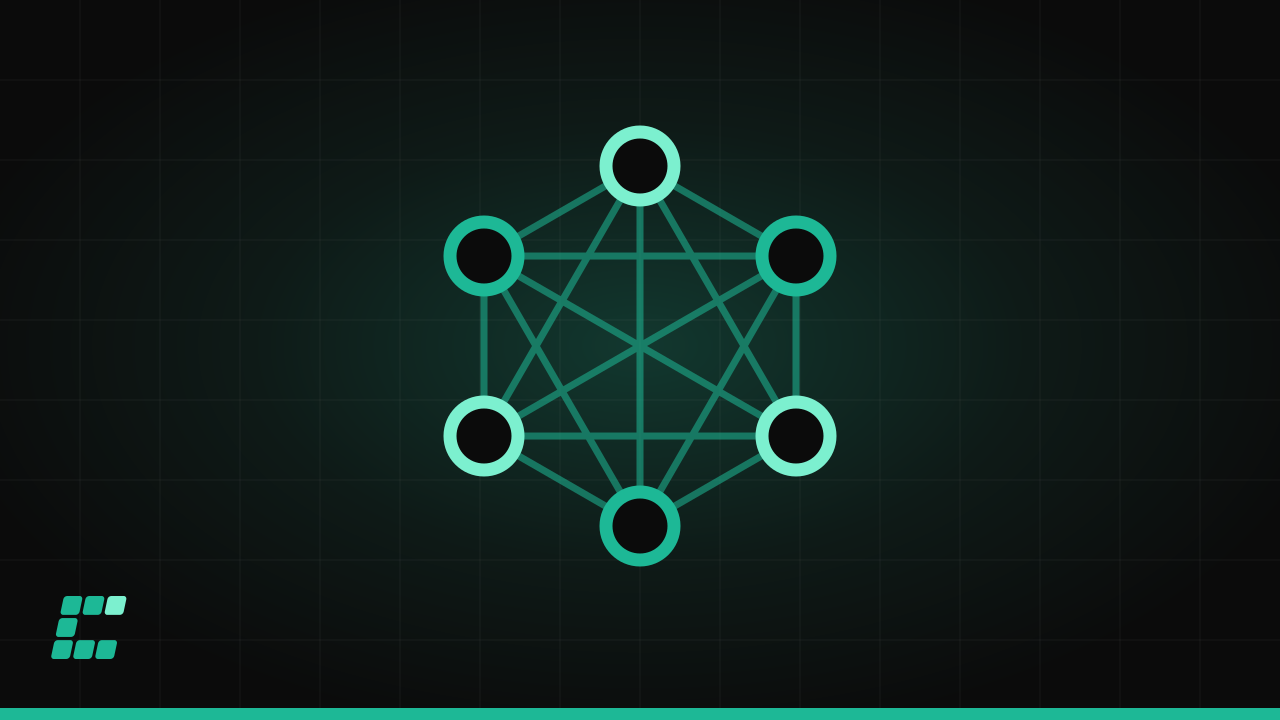
In crypto, decentralized means that no single person, company or government controls the network. Control over the record, the rules and the software is spread among many independent participants.
What does decentralized mean in practice?
A bank is centralized. One organization keeps the record of balances, approves payments and can freeze an account or reverse a transfer.
On a decentralized blockchain, thousands of computers called nodes each hold the record. New blocks are added by miners or validators scattered around the world. The rules change only when most participants choose to run new software. There is no chief executive, no head office and no off switch. The question of who controls cryptocurrency has no single answer for that reason.
Is it all or nothing?
No. Decentralization is a spectrum, and it has several separate dimensions:
- Who produces blocks. How many independent miners or validators there are, and how much the largest few control.
- Who runs nodes. How many people check the rules for themselves, and whether their machines sit in a few data centers.
- Who writes the code. Whether a broad group of developers maintains the software or one company does.
- Who holds the coins. Founders and early investors with large holdings can dominate decisions where votes are weighted by coins.
- Who can intervene. Some stablecoin issuers can freeze tokens, and some networks have been paused by their operators.
Bitcoin is generally regarded as the most decentralized network. Many newer chains depend on a small set of validators or a single company for a key component. A crypto exchange such as Coinbase or Kraken is an ordinary centralized business, even though the assets it handles are not.
Why does it matter?
Supporters point to four benefits. A decentralized network is hard to censor, because no one party can block a payment. It has no single point of failure. It does not require trust in an institution to keep honest records. And it is open to anyone with an internet connection.
What does it cost?
Speed, for a start. Thousands of computers agreeing on every entry is slower and more expensive than one company updating a database.
There is also no one to fix mistakes. A lost private key cannot be reset, and a payment to a fraudster cannot be reversed. Decisions are slow, and disputes can split a network in two, as described in the guide to hard forks and soft forks.
Critics add that the word is often used loosely. Some projects market themselves as decentralized while a small team holds the keys that can change the code or move funds. And when a decentralized system does fail, it can be unclear who, if anyone, is accountable to the people who lost money.
This guide explains how things work. It is not financial, legal or tax advice. Last updated .