
Who controls cryptocurrency?
No single person or company controls bitcoin. Power is split among developers, miners, node operators and holders. Some tokens are run by a company.
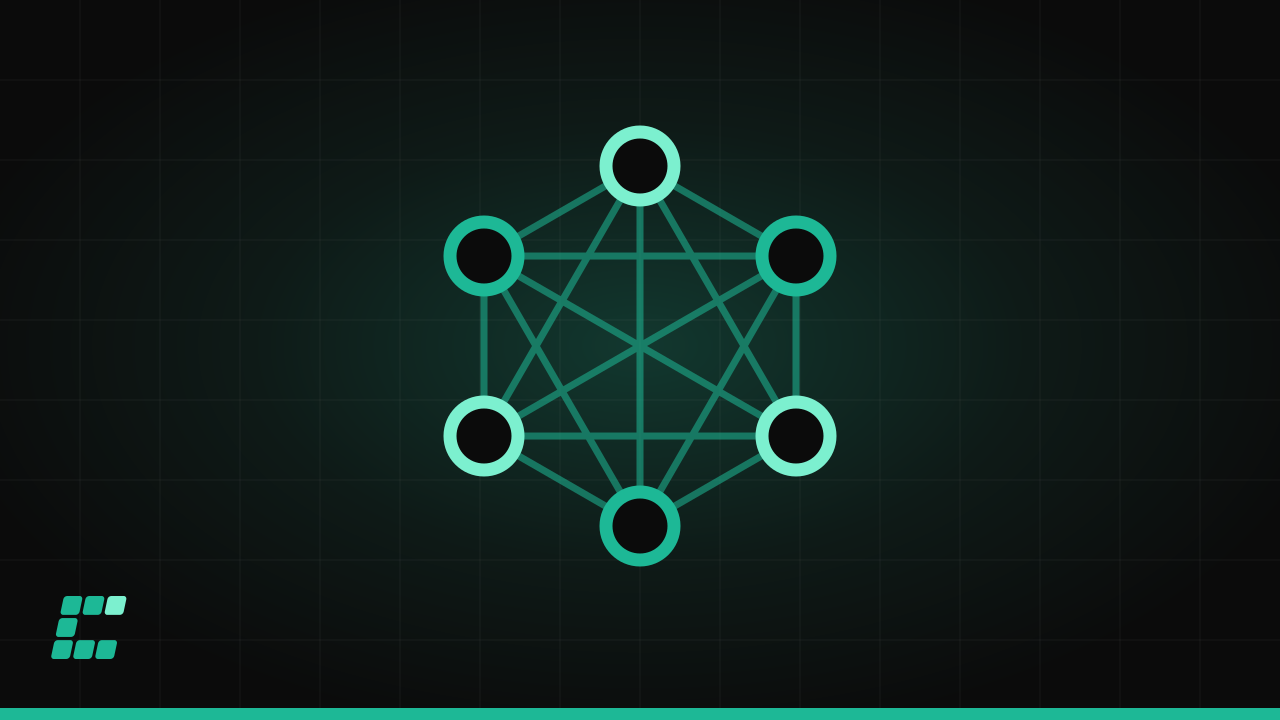
No single person, company or government controls a cryptocurrency such as bitcoin. Control is split among developers, the operators who process transactions, the people who run the software and those who hold the coins. Some tokens, though, are run by a company that can freeze or create them at will.
Who makes the rules?
On an open network, four groups share influence and none can act alone.
- Developers write the software and propose changes. They cannot force anyone to install an update.
- Miners and validators assemble transactions into blocks. They decide what goes into the next block, but they cannot change the rules.
- Node operators run computers that check every block against the rules and reject any that break them. A node is the network's referee.
- Holders and users decide which version of a coin they are willing to use and pay for.
When these groups disagree about a rule change, the network can split in two, an event called a fork.
Are all cryptocurrencies decentralized?
No. Decentralization, meaning the absence of a single point of control, comes in degrees.
Dollar stablecoins such as USDT and USDC are issued by companies that can create tokens and freeze those held at particular addresses. Many newer tokens are launched by a team that keeps a large share of the supply and holds special keys that can alter the code. Even on bitcoin, mining is concentrated in a small number of large pools.
Exchanges are another center of power. They hold coins on behalf of millions of customers and decide which assets are listed and who may trade.
Who owns crypto, and who sets the price?
Nobody owns a network such as bitcoin. The coins on it belong to whoever holds the private keys. Holders include individuals, exchanges, investment funds, companies and governments. A holder with a very large balance is known as a whale.
Nobody sets the price either. It comes from buyers and sellers trading on exchanges around the clock. In small markets, a few large holders can move a price sharply, and schemes such as the pump and dump do occur. Larger markets are harder for any one party to move.
Where do governments come in?
A government cannot edit bitcoin's ledger or shut down a network that runs on computers in many countries. It can control the points where crypto meets the regular financial system.
Regulators license exchanges, set rules for companies that issue tokens, require identity checks and tax gains. They can also restrict or ban trading within their borders. The guide to who regulates crypto in the United States maps the agencies involved.
This guide explains how things work. It is not financial, legal or tax advice. Last updated .