
What is a layer 1 blockchain?
A layer 1 blockchain is a base network, like Bitcoin or Ethereum, that processes and secures its own transactions without relying on another chain.
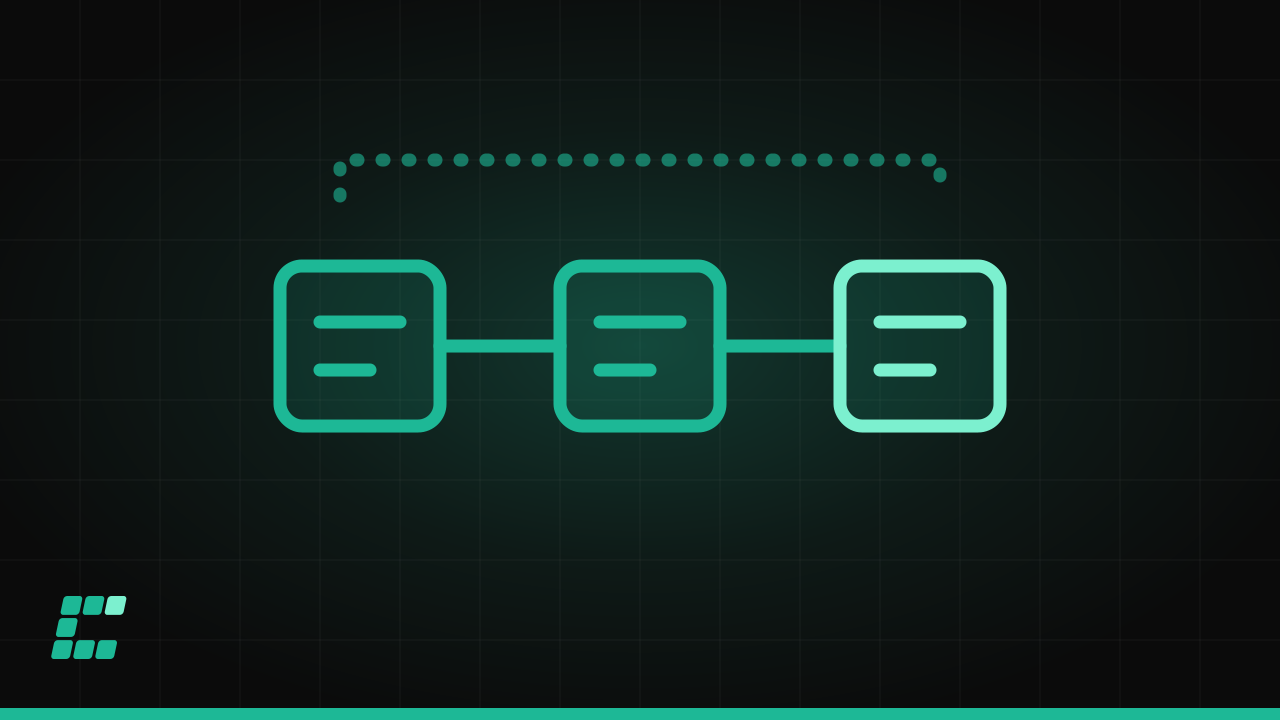
A layer 1 blockchain is a base network that records and secures its own transactions. Bitcoin, Ethereum and Solana are all layer 1s. Anything built on top of one and relying on it for security, such as the Lightning Network or an Ethereum rollup, is called a layer 2.
What is layer 1 in crypto?
In crypto, layer 1 means the foundation. ethereum.org describes Ethereum's layer 1 as the node operators who secure and validate the network, the block producers, the blockchain and its transaction history, and the consensus mechanism that keeps everyone in agreement. Ethereum's layer 1 is also called Mainnet.
A layer 1 does not settle to any other chain. Its own nodes check every block, and its own native coin usually pays the fees.
What are some layer 1 examples?
- Bitcoin, secured by proof of work and named by ethereum.org as a base layer alongside Ethereum.
- Ethereum, which runs smart contracts and serves as the base for many layer 2 networks.
- Solana, a proof-of-stake chain that asks far more of the computers that run it.
Many newer networks also describe themselves as layer 1s, including Sui, Aptos and NEAR. Our comparison of Ethereum and Solana shows how two layer 1s can make very different design choices.
What is the difference between layer 1 and layer 2?
A layer 2 processes transactions away from the base chain and then records results on it. ethereum.org defines a layer 2 as a separate blockchain that extends Ethereum and inherits its security. With a rollup, for example, transaction data is posted to Ethereum, so undoing a rollup transaction after that point would mean undoing Ethereum itself.
The layer 1 does the slow, expensive work of security and final settlement. The layer 2 handles volume. Our guide to layer 2s covers rollups and payment channels, and the risks they add.
Why do layer 1 blockchains have trouble scaling?
ethereum.org describes a blockchain trilemma: a simple design can achieve only two of three goals, being decentralized, secure and scalable. Pushing more transactions through a layer 1 means bigger or faster blocks, and every node has to process all of them.
The trade-off shows up in hardware. Bitcoin caps each block at 4 million weight units under BIP 141, and bitcoin.org lists 2 GB of memory as a minimum for a full node. Solana's validator software, by contrast, lists 256 GB or more of memory and at least 2 Gbit/s of bandwidth for a staked node. Higher requirements allow more throughput but mean fewer people can afford to verify the chain.
ethereum.org says keeping the barrier to entry low for node operators is critical, and that when demand on layer 1 is high, transactions slow and fees rise. Ethereum has largely chosen to keep its base layer modest and push volume to rollups, which ethereum.org says have become its main scaling technique. Other layer 1s choose to scale the base chain directly and accept heavier node requirements.
This guide explains how things work. It is not financial, legal or tax advice. Last updated .