
What is finality in blockchain?
Blockchain finality is the point when a transaction cannot be reversed. Bitcoin's is probabilistic, while Ethereum finalizes blocks in about 15 minutes.
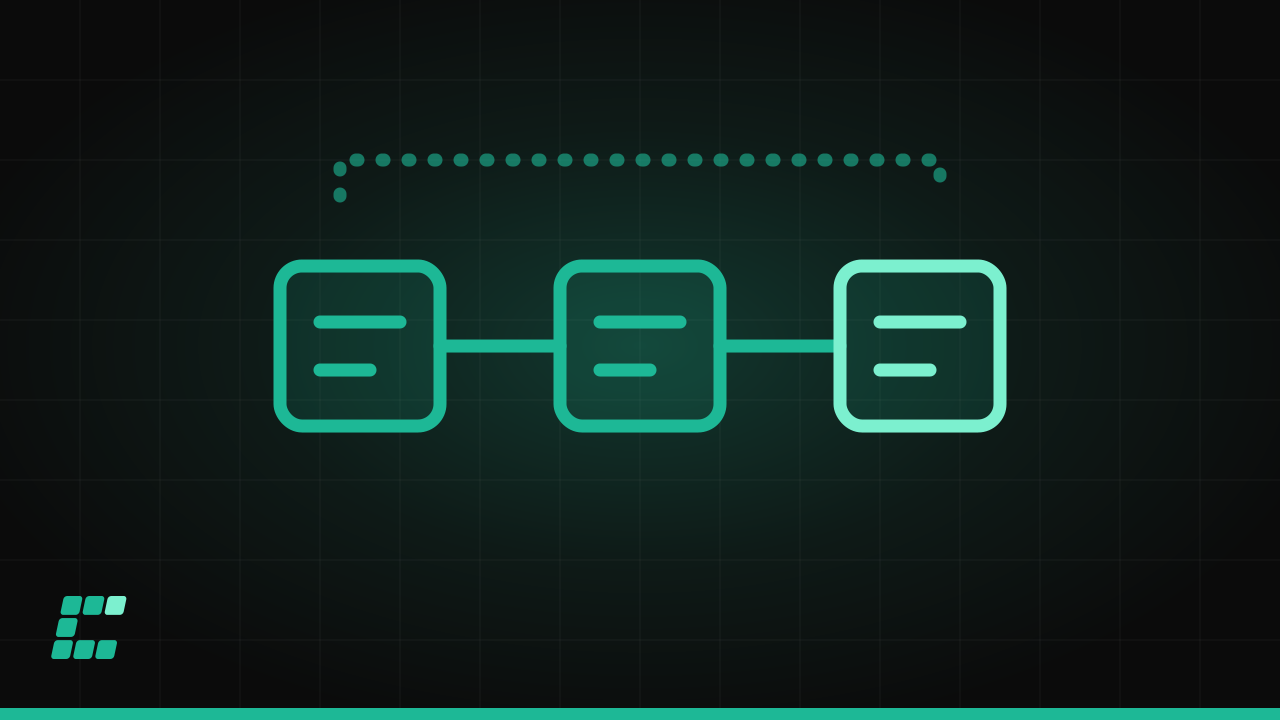
Blockchain finality is the point at which a transaction is settled for good and cannot be altered or undone. Until then, a network can in some cases reorganize recent blocks, which could let someone spend the same coins twice. Different blockchains reach finality in different ways and at different speeds, which is one reason crypto transfers take different amounts of time.
What is finality in crypto?
Most blockchains add transactions in blocks. A transaction in the newest block is not yet fully settled, because the network may still swap that block for a competing one. Finality describes when that risk ends, or becomes small enough to ignore.
Exchanges care about this because crediting a deposit too early could let someone pull off a double spend. They set their own confirmation thresholds for each network.
What is probabilistic finality?
Bitcoin uses probabilistic finality. The Bitcoin Wiki explains that a transaction in a block has one confirmation, and each block mined on top adds another. The more confirmations, the less likely the transaction can be reversed, but the probability never reaches zero. An attacker with enough mining power could in theory still rewrite history, the scenario behind a 51% attack.
The familiar six-confirmation rule is a convention, not a protocol rule. The Bitcoin Wiki says it assumes an attacker controls no more than about 10% of the hashrate and that a risk below 0.1% is acceptable. Against an attacker with 40% of the hashrate, keeping the odds under 1% would take about 60 confirmations. Newly mined coins cannot be spent until they are 100 blocks deep.
What is Ethereum finality?
Ethereum's proof of stake gives economic finality. Time is split into 12-second slots, grouped into epochs of 32 slots. Validators vote on checkpoints at the start of each epoch. When a pair of checkpoints wins votes from at least two-thirds of all staked ether, the newer one is justified and the older one becomes finalized.
According to ethereum.org, reversing a finalized block would require an attacker to give up at least one third of all staked ether. If the chain fails to finalize for more than four epochs, an inactivity leak slowly drains the stake of validators who are not voting with the majority until finality can resume.
What is finality time in blockchain?
It varies widely. ethereum.org puts Ethereum's time to finality at about 15 minutes and is researching single slot finality, which would finalize a block in the same slot it is proposed. It describes that work as still in research and several years away.
Solana's documentation gives levels of commitment under its current Tower BFT design. A block is confirmed once 66% or more of stake has voted on it, and finalized once 31 or more confirmed blocks are built on top. Networks using CometBFT, the engine behind many Cosmos chains, commit a block once validators holding more than two-thirds of voting weight sign it, and remain safe as long as less than a third are faulty.
This guide explains how things work. It is not financial, legal or tax advice. Last updated .