
What is a blockchain reorg?
A blockchain reorg happens when nodes drop recent blocks and switch to a competing chain with more work, often after two blocks appear at the same time.
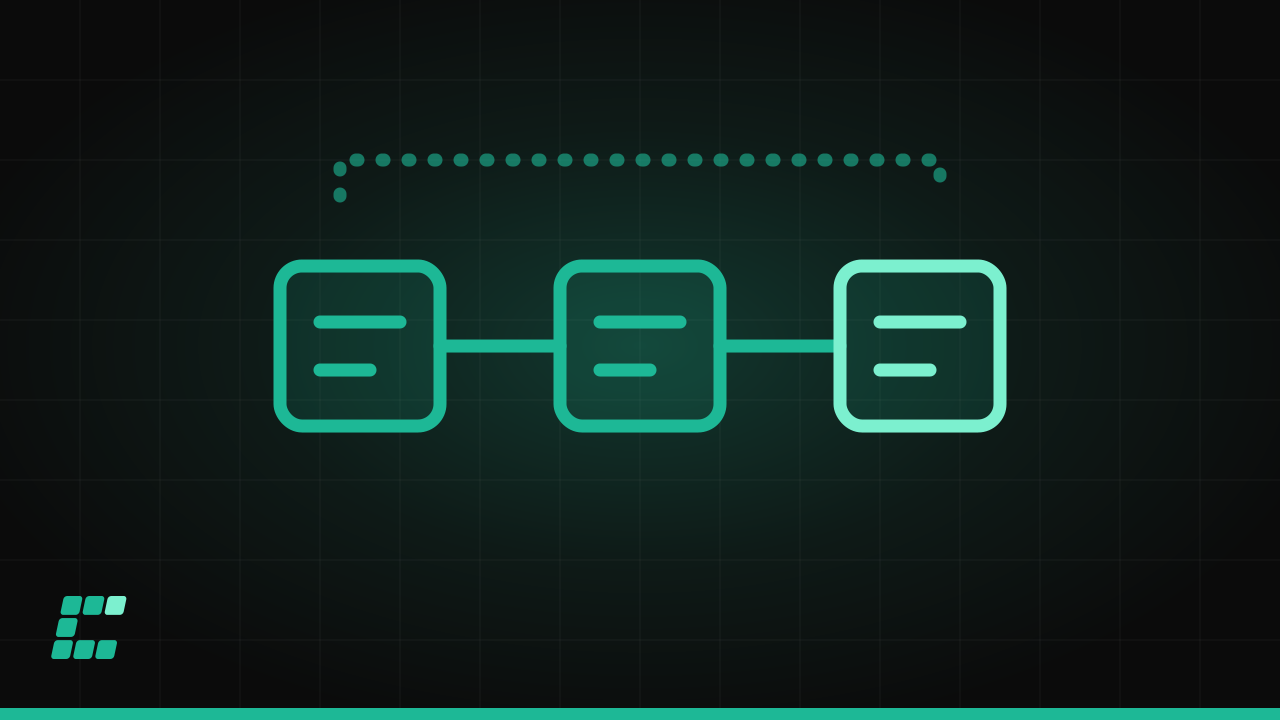
A blockchain reorg, or blockchain reorganization, is when the network swaps out recent blocks for a different version of the chain. Nodes always follow the chain with the most work (or, on proof-of-stake networks, the most validator support), so if a competing branch overtakes the one they are on, they switch to it. The dropped blocks are no longer part of the official history.
Why does a block reorg happen?
The usual cause is timing. On Bitcoin, two miners can find valid blocks at nearly the same moment. Because blocks travel across the network at different speeds, some nodes see one block first and others see the other. For a short time the network disagrees about the latest block. The tie breaks when the next block is built on top of one of them, and nodes on the losing side reorganize to the longer chain.
Learn Me A Bitcoin notes that these natural reorgs are uncommon and normally affect only the top block. Most transactions in the dropped block also appear in the winning block. Any that do not go back to the mempool and can be mined later.
What is a Bitcoin orphan block?
People often call the dropped block an orphan block, but the stricter term is a stale block. A stale block has a valid parent but is no longer on the active chain. In Bitcoin node terms, an orphan block is one that arrives before its parent is known. In everyday use, both words describe a block that lost out in a reorg. To understand what a block contains, see what a block is.
What is a reorg attack?
A reorg can be deliberate. An attacker with majority control of a network's mining power can build a private chain and then release it to replace many public blocks. This lets them reverse their own payments and spend the same coins twice. That is the core of a 51% attack.
Ethereum Classic offers a real example. In August 2020, The Block reported that more than 4,000 ETC blocks were reorganized, days after an earlier attack in which about 807,000 ETC were double spent. Binance and the mining pool operator Bitfly paused ETC deposits and withdrawals while it played out.
Can proof-of-stake chains have reorgs?
Yes, but finality limits how far back they can go. On May 25, 2022, the Ethereum beacon chain saw a 7-block reorg. Researcher Barnabé Monnot traced it to a late block combined with validators running different versions of a fork-choice update called proposer boost. Finality was not affected.
According to ethereum.org, once a block is finalized it cannot be reverted without destroying a large share of staked ETH. That is why many services wait for a set number of confirmations or for finality before treating a deposit as settled. Our guide on finality in blockchain explains this in more detail.
This guide explains how things work. It is not financial, legal or tax advice. Last updated .