
What is a layer 3 blockchain?
A layer 3 blockchain is a chain that settles on a layer 2 instead of directly on a base chain like Ethereum, usually to serve one app or community.
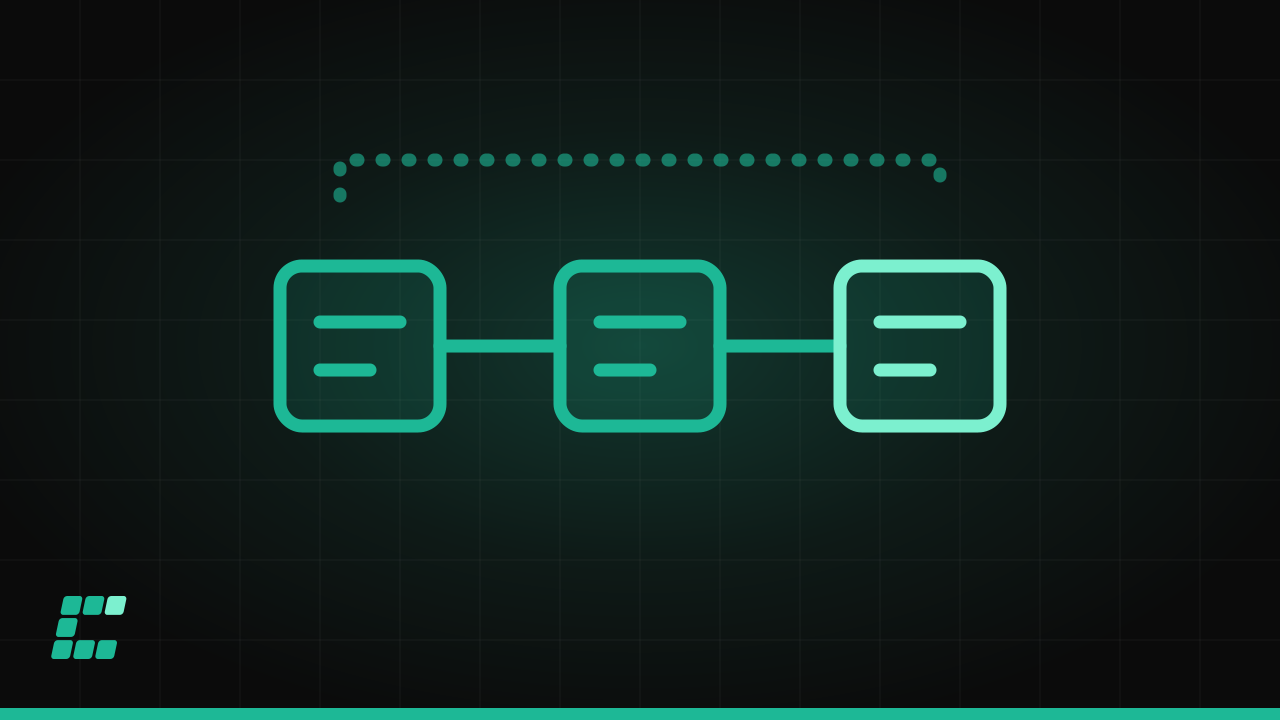
A layer 3 blockchain is a chain built on top of a layer 2, the same way a layer 2 is built on top of a layer 1. Instead of sending its transaction data and proofs straight to Ethereum, a layer 3 sends them to a layer 2 such as Arbitrum One or Base, which then settles on Ethereum. The idea is to give a single application or community a dedicated chain that is cheap to run and easy to customize.
What does layer 3 blockchain mean?
Crypto networks are often described in layers. The layer 1 is the base chain that provides final settlement. A layer 2 processes transactions off the base chain and posts the results back to it, usually as a rollup. A layer 3 repeats that pattern one level up, treating the layer 2 as its settlement layer.
In practice the term is loose. It describes where a chain settles, not a single technical design. Some layer 3s are full rollups, while others keep their data with a committee to save costs.
What are some layer 3 blockchain examples?
In June 2023, Offchain Labs, the team behind Arbitrum, released Orbit, a software stack for launching chains that settle on Arbitrum One or Arbitrum Nova. The Block described these as layer 3s whose builders could set their own governance, permissions and fee token. Arbitrum's current documentation calls them Arbitrum chains and lists options such as a custom ERC-20 gas token and a choice between Rollup mode and AnyTrust, which uses a data availability committee.
Degen Chain is a well known example. Announced in March 2024 for a community on the Farcaster social app, it was built with Orbit and AnyTrust, settles on Base, and uses the DEGEN token for gas, according to Decrypt.
How is layer 3 different from layer 2?
The main difference is purpose. Layer 2s mostly aim to scale a base chain for everyone. Layer 3s mostly aim to customize. In a 2022 essay, Ethereum co-founder Vitalik Buterin argued that stacking rollups on rollups does not keep multiplying capacity, because data can only be compressed once. He saw sense in layer 3s built for specific features such as privacy, app-specific computing, or cheaper setups that accept weaker data guarantees.
That last point matters for users. A layer 3 inherits risks from every layer below it, plus its own operator, sequencer and bridge. If it stores data with a small committee rather than on Ethereum, it trades some security for lower cost. Moving funds between a layer 3 and Ethereum can also mean passing through two bridges and two sets of withdrawal rules.
Why do projects build layer 3s?
Teams usually want predictable fees, their own gas token, control over upgrades, or room for high-volume uses like games and tipping without competing for space on a busy shared chain. Whether those benefits outweigh the extra complexity depends on the chain's design, so it is worth checking how a given layer 3 handles data, bridging and upgrades before using it.
This guide explains how things work. It is not financial, legal or tax advice. Last updated .