
What is an appchain in crypto?
An appchain is a blockchain built to run one application, giving its team control over fees, speed and rules instead of sharing a general-purpose network.
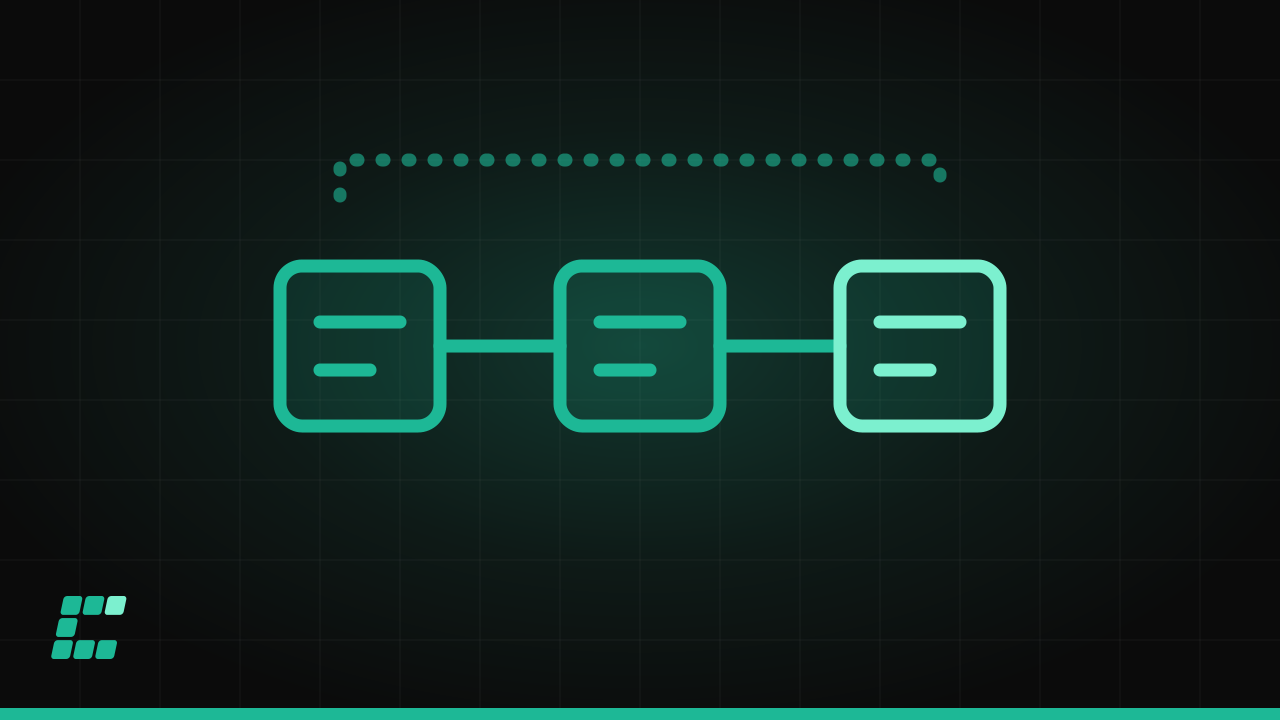
An appchain is a blockchain designed to run one application. Instead of deploying a smart contract on a shared network like Ethereum, the team launches a chain whose rules, fees and upgrades exist to serve that one app. The Cosmos SDK documentation describes these as blockchains customized to operate a single application.
What is an app chain in crypto?
On a general-purpose chain, every app competes for the same block space and runs inside the same virtual machine. The Cosmos docs list the downsides. Contracts share computing resources, the virtual machine limits what developers can build, and the host chain's governance sits above the app's own.
An appchain removes those limits. Its builders choose the consensus engine, the programming language, the account model and how fees work. They can also set code to run automatically at the start or end of each block, something the Cosmos docs note the EVM does not support.
What is the difference between an appchain and a layer 2?
The two ideas overlap, so the useful question is where security comes from. A layer 2 posts its results to a base chain and borrows that chain's security. An appchain is defined by its purpose, one app, and it can get security in several ways:
- Standalone chain. A Cosmos SDK chain runs its own validator set, so its safety depends on how much value those validators stake.
- Shared security. Polkadot's docs describe parachains as specialized chains that inherit security from the relay chain's validators instead of recruiting their own.
- Rollup-based appchain. Arbitrum's docs say Arbitrum chains anchor security and finality to Ethereum while letting teams set block times, gas tokens and permissions. That makes them both an appchain and a layer 2 or layer 3.
What are some appchain examples?
dYdX is the best-known case. In June 2022 the derivatives exchange said it would leave StarkEx, an Ethereum scaling network, and build its own chain with the Cosmos SDK, run by a distributed set of validators. The Block later described dYdX v4 as an appchain in the Cosmos ecosystem. See what is dYdX for how it works today.
Other examples follow the same pattern. Many chains in the Cosmos ecosystem each serve one main purpose, Polkadot parachains run application-specific logic, and teams using Arbitrum's stack launch chains dedicated to a single game or service.
Why build an appchain?
Arbitrum's docs give three common reasons. A dedicated chain guarantees capacity, so the app does not slow down when another app gets busy. A custom gas token lets users pay fees in the project's own token. And permissioning lets a team restrict who can run validators, for example to meet regulatory needs.
Sovereignty is the other draw. The Cosmos docs point out that an appchain's community can upgrade the chain or fix bugs without asking anyone else.
The costs are real. A team must build and maintain far more software, and users must often bridge assets in, which is why The Block reported dYdX adding one-click onboarding tools in 2023. Every crypto bridge adds its own risks.
This guide explains how things work. It is not financial, legal or tax advice. Last updated .