
What is merged mining and how does it work?
Merged mining lets miners secure two proof-of-work blockchains with the same hashing, as Litecoin miners do for Dogecoin and Bitcoin miners do for Rootstock.
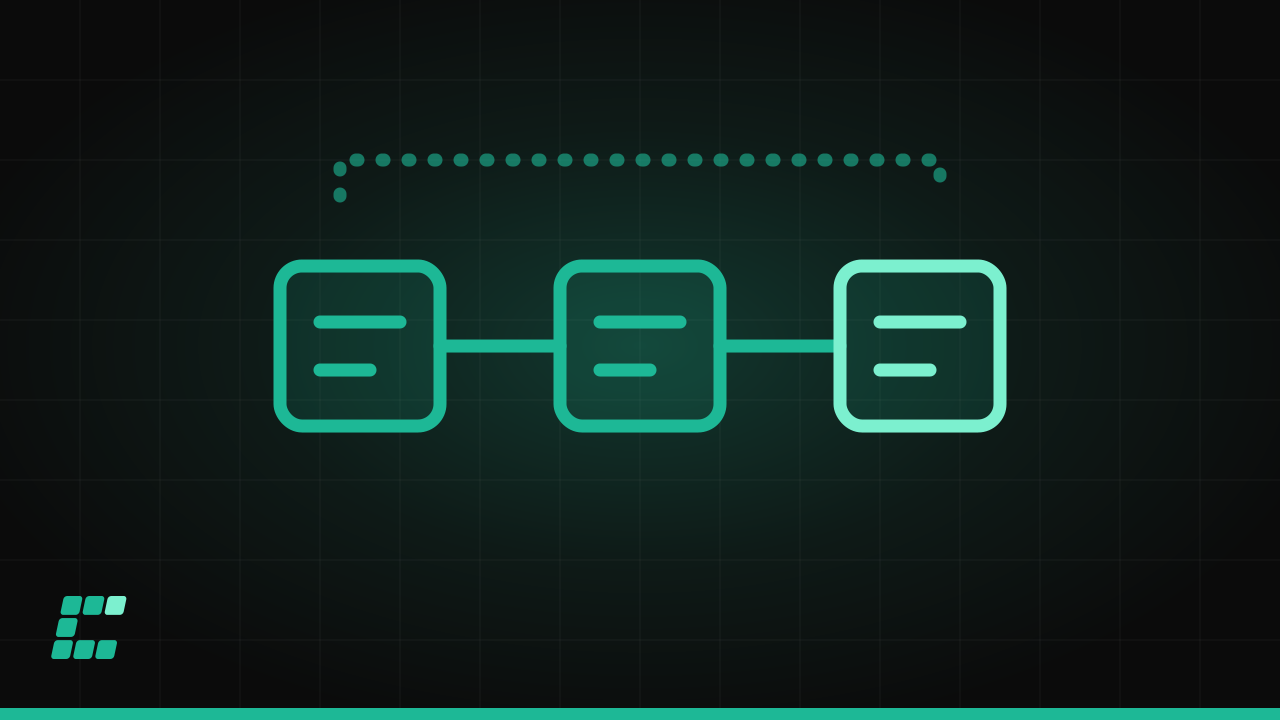
Merged mining is a way for miners to secure two blockchains at once using the same computing work. It works between chains that share a hashing algorithm, so a miner's machine does its normal job on the main chain and that same work is reused as proof of work on a second chain. The technique is also called AuxPoW, short for auxiliary proof of work.
How does merged mining work?
The Bitcoin Wiki's specification describes two roles. The parent chain is where the hashing happens, and it does not need to know merged mining exists. The auxiliary chain is the one that accepts the parent's work, and its software must be changed to check that work.
Here is the basic flow:
- The miner builds a block for the auxiliary chain and puts its hash inside the coinbase transaction of the parent block it is working on.
- The miner hashes the parent block as usual.
- Each chain has its own difficulty. If a result meets the auxiliary chain's lower target, the miner submits the parent block header plus proof linking it to the auxiliary block. That counts as a valid auxiliary block even if it is not good enough for the parent.
Several auxiliary chains can be mined together. Their block hashes go into a small merkle tree, and only the tree's root sits in the parent coinbase. The idea dates to Namecoin, a 2011 chain for decentralized domain names, which turned on merged mining with Bitcoin at block 19200.
How does Litecoin and Dogecoin merged mining work?
Dogecoin and Litecoin both use the Scrypt algorithm. In 2014, CoinDesk reported, Dogecoin's falling hashrate raised fears that attackers could push through fraudulent transactions. Dogecoin hard-forked to AuxPoW at block 371337, letting Litecoin miners secure it too. The history and the effect on home mining are covered in can you mine Dogecoin.
Can you do merged mining with Bitcoin?
Yes. Bitcoin is the parent chain for several networks that use its SHA-256 algorithm. Namecoin was the first. Rootstock, a smart contract sidechain, is another. Its docs say pools add a Rootstock block reference to every mining job, and solutions meeting Rootstock's lower difficulty become Rootstock blocks. Miners earn a large share of that chain's fees for no extra hashing. See what is Rootstock for more.
How does a merged mining pool pay miners?
A mining pool builds the combined block templates and decides how to pass on the extra rewards.
Methods differ. In 2014 litecoinpool.org paid members only in litecoin and raised its pay-per-share rate to 125% to reflect expected Dogecoin rewards. ViaBTC wrote in August 2026 that one Scrypt machine pointed at its Litecoin pool is all that is needed, with no split hashrate, and that whether DOGE is paid depends on the pool's rules and payout method.
Merged mining has a trade-off. An auxiliary chain gets its security only from the parent-chain miners who choose to include it. If few of them take part, or if most of its hashrate comes through a handful of pools, those pools have a large say over the smaller chain.
This guide explains how things work. It is not financial, legal or tax advice. Last updated .